Becoming a Claude Certified Architect
Over the summer the company asked who wanted to get Claude certified. I raised my hand. This week I passed, and then I built a page so the next person doesn't have to start from zero.
View ProjectWhat It Actually Is
Claude Certified Architect – Foundations is Anthropic's exam for people who build things with Claude. It covers Claude Code, the Agent SDK, the Claude API and MCP, so basically everything you touch once you go past chatting and start building.
It's not really a memory test. Most questions describe a real situation and give you several answers that would all technically work. Your job is to pick the best one. When is an agent overkill? How do you design a tool so Claude actually uses it well? What do you do when things fail halfway?
It's about trade-offs. Which, as a designer, felt weirdly familiar.
How I Prepared
After I applied, the company sent us the official docs and told us to keep learning until we officially became an Anthropic partner. That part matters: the exam is only open to people at companies in the Claude Partner Network, and you register with your work email. You can't just sign up on your own. Waiting gave me a few relaxed months, and I used them in a very relaxed way.
I started during my summer vacation in August. “Preparing” meant some light reading on slow days and a few drill questions to see what I already knew. I'm familiar with Claude and use it, so it wasn't a cold start.
I used three sources:
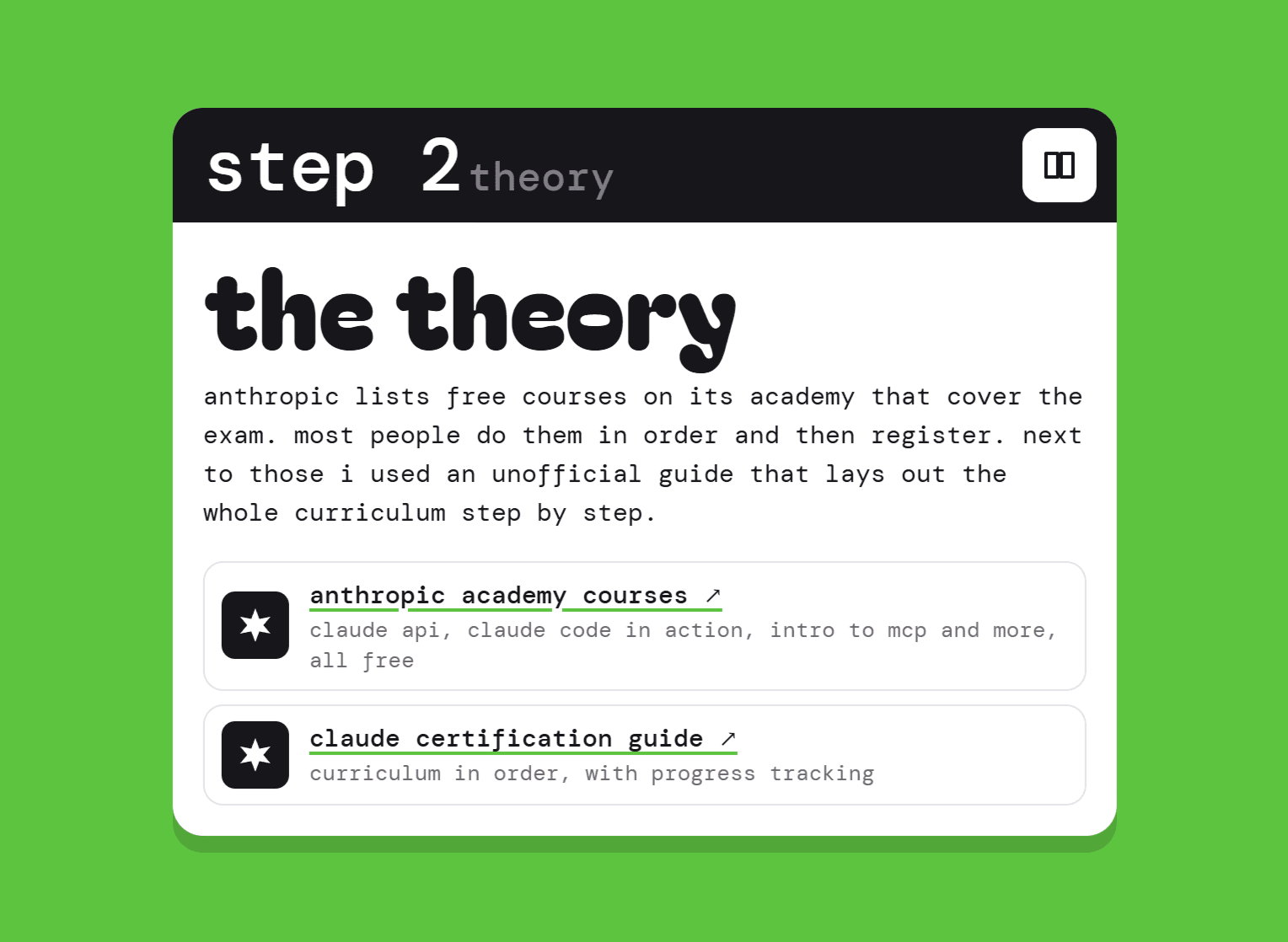
Official courses – Anthropic Academy. Free, and they map straight to the exam. Most people do them in order, then register.
Unofficial curriculum – claudecertificationguide.com. Everything laid out in order, with progress tracking and a drill mode to double-check yourself. The mock exams were free when I used them, now they're behind a paywall.
Free mock exams – a colleague built a practice site that mimics the real questions really well. This is where I spent most of my time.
Once the theory was done I switched to simulations every other day, whenever I had spare time. Some days a few questions, some days a full mock. No strict plan, just enough to get used to how the questions are written.
In total it was about an hour a week, theory or mock tests, for roughly three months. I felt ready once I was getting around 90% right on the mocks. Looking back, I wouldn't change a thing.
Exam Day
On 4 November 2026 I passed with 850 out of 1000. The questions held no surprises after all those mocks.
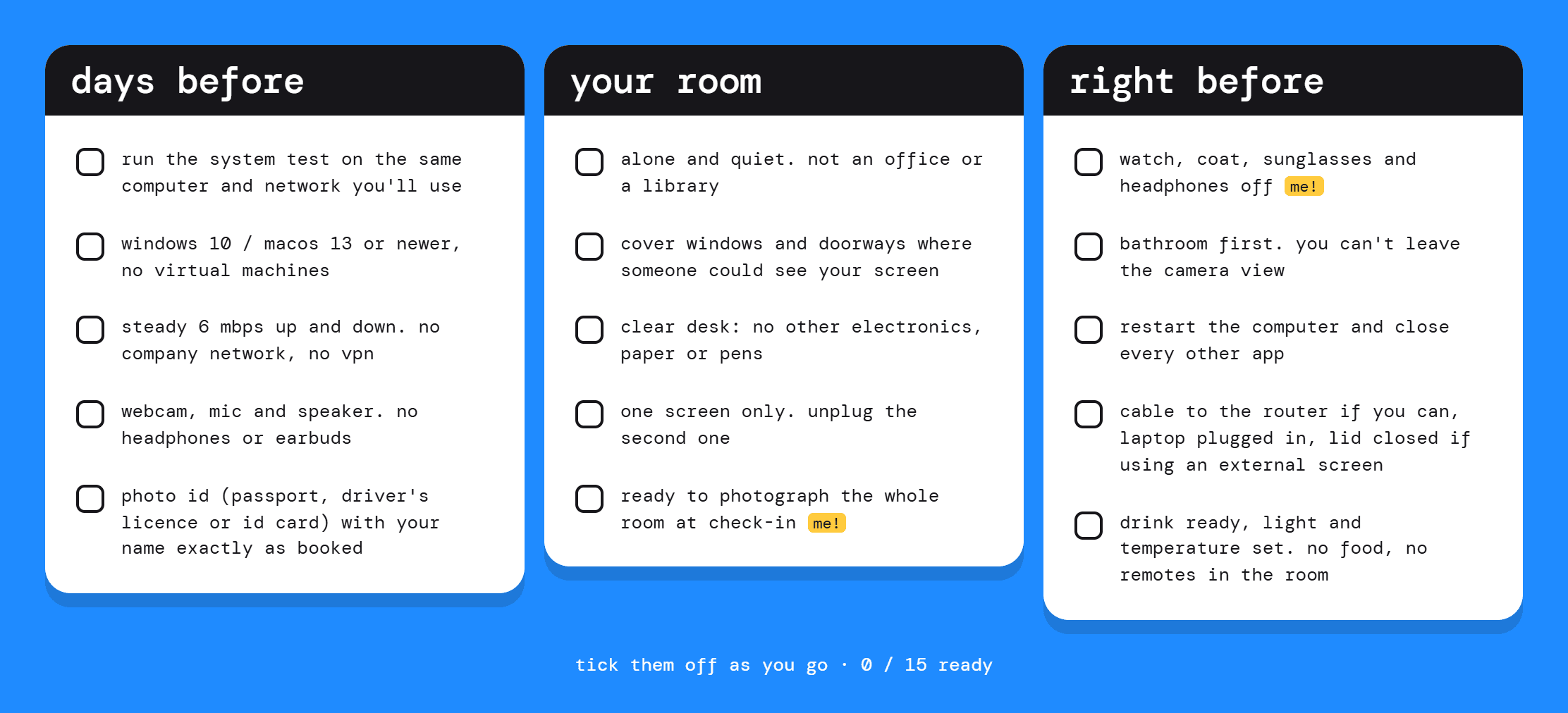
You take it from home through Pearson VUE's OnVUE, with a proctor watching you on camera. One screen only, no headphones, nothing on the desk, no one else in the room. At check-in you take pictures of your whole room, not just the desk, so tidy everything.
And take off your watch. I forgot I was wearing mine, and somewhere in the middle of the exam a message popped up telling me to remove it. Not the moment you want to find out you skimmed the rules.
A Page for the Team
Afterwards I had to explain the whole thing to my colleagues. What it is, how I prepared, what to watch out for. I could write a long message in the team chat that everyone skims, or I could make something people actually want to scroll through.
I went with the second one, mostly because I'd recently seen Daily Rituals by bar.digital and couldn't stop thinking about it. Big chunky lettering, loud colour blocks, little cards that look like widgets. It felt like the opposite of a certification guide, which is exactly why I wanted it.
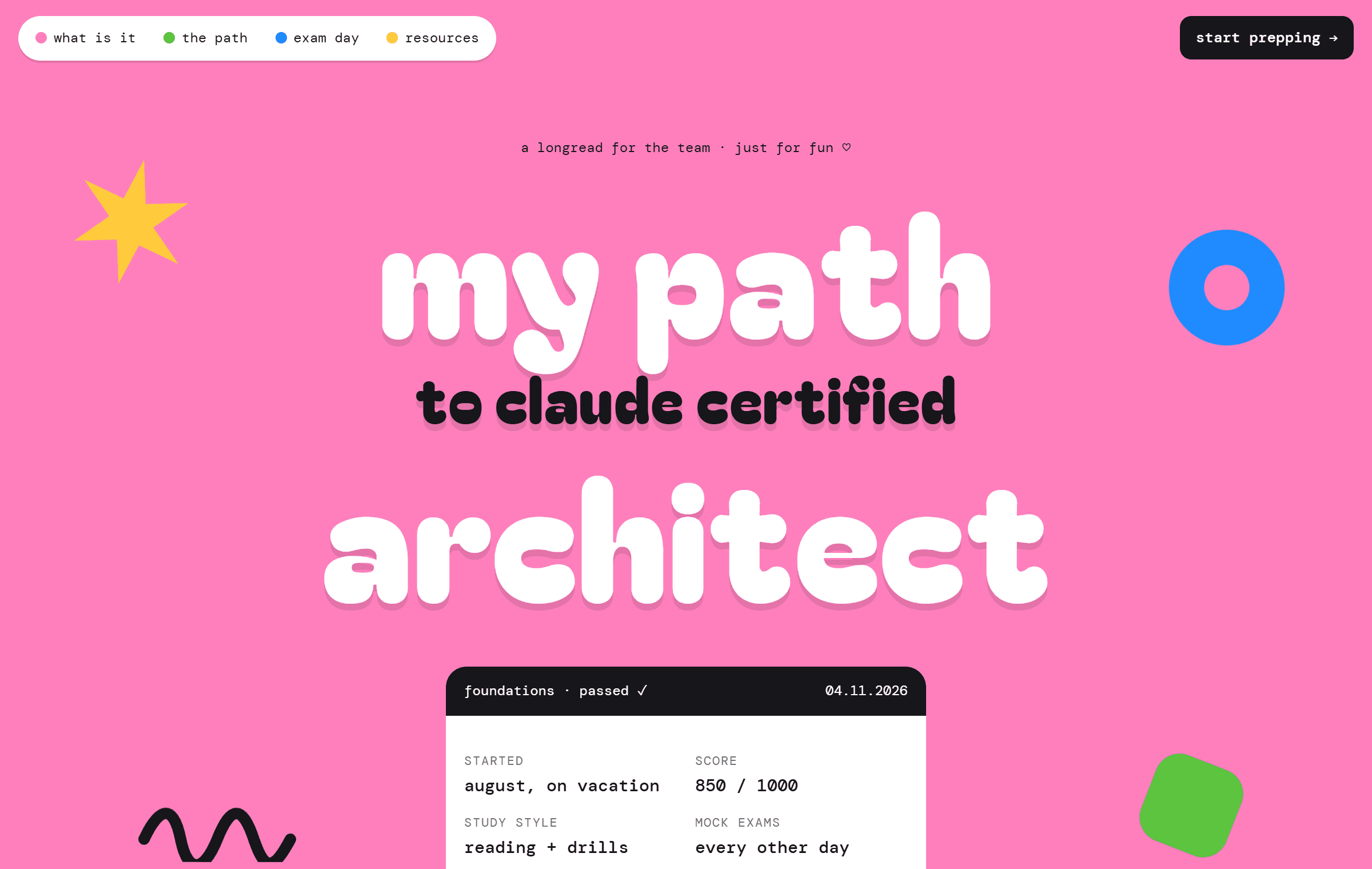
The steps scroll sideways, one colour per step, from signing up to exam day.
The exam rules turned into a checklist you can tick off the night before, with the watch marked as my personal contribution.
How It's Built
Fittingly, with Claude Code. I described my journey, shared the inspiration site, and we went back and forth. Me telling the story and pointing at what felt off, Claude building and fixing. Remove this section, link those two, the text overlaps here.
It's a single HTML file, no framework. GitHub repo, Vercel, and a subdomain, same setup as the statusline configurator. Getting it live took a few minutes, and most of that was me confirming my identity to Vercel.
Who It's For
Primarily my colleagues who are next in line. But if you work at a partner company, use Claude in your work and are thinking about the exam, you're probably closer than you think. About an hour a week was enough for me, and what I got back was more clarity on how things should work.
Just take your watch off.